Hey there, if you’re in the food packaging game, you know how messy things can get when cartons start piling up all wrong—especially with hygiene rules, speed demands, and waste cuts hanging over you. I’m Jake, part of the team that builds and tweaks food cartoning machines for a living, and today I wanna walk you through how these things actually make carton stacking look like it was done by a pro, not a chaos gremlin. Food Cartoning Machine
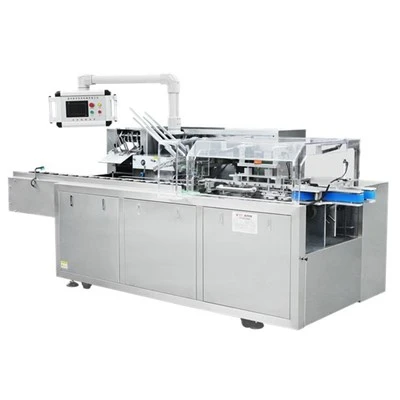
First off, let’s get one thing straight: this isn’t just “putting boxes on top of each other.” For food gear, it’s way more specific. You can’t have a crumpled milk carton in a case of cereal, right? No dented cookie boxes leaning against each other that could split open, no misaligned juice cartons that leak during shipping. Our machines (and most good ones, tbh) handle stacking in four key steps that are surprisingly straightforward once you break ‘em down.
Let’s start with the feeding zone—this is where raw flat cartons come in, usually stacked in a hopper. Wait, hold up, not just dumping ‘em in. We use what’s called a “singulation mechanism” here. Yeah, it sounds fancy, but all that means is separating one carton from the bunch so only one moves at a time. Why? If two stick together (cartons are made of cardboard coated for food safety, sometimes a little static can make ‘em cling), you end up with a double-decker carton that doesn’t close right. Our machines use a little rotating arm with a soft rubber pad—rubber so it doesn’t scratch the coating— that pulls the top carton off, and a guide plate that stops the lower ones from moving. Works even if the cartons are from different brands or sizes, as long as they’re in the standard flat stack size. That’s a big deal for clients who run mixed product lines.
Next step: erecting the carton. You can’t stack a flat cardboard sheet, obviously. This is where the machine kicks it up a notch. As the singulated carton moves along a conveyor, it hits a series of forming plates—like little folding guides. For example, a cereal box flat goes in, the side panels fold out, the bottom tabs get locked into place, and suddenly it’s a ready-to-fill box. But here’s the order part: every single carton gets erected exactly the same way, same position every time. No wonky bottoms here. We calibrate these plates so even if a carton is 5mm wider or narrower (which happens with slight manufacturing variations), it still lines up right. And once erected, the carton stays in a “pocket” on the conveyor—little slots that hold it steady, no sliding around. That’s crucial for when it’s time to stack.
Now the stacking part itself, which is what everyone asks about. There are two main ways we do this, depending on what the client needs: case packing (stacking cartons into a bigger outer box) or palletizing (stacking full cases onto a pallet for shipping). Let’s talk about case stacking first, since that’s where most of our food clients start. The machine has a “stacking station” where erected cartons come in, one after another. Instead of just dropping them on top, we use a “crash carton” or a “grouping arm” that holds 4, 6, or 8 cartons at a time (whatever size the client sets) in perfect alignment. The arm moves horizontally, so all the cartons line up edge to edge, no gaps. Then, that whole group is lowered into the outer shipping box. We add a little check here: a photo sensor that makes sure each carton is in the right spot. If one’s off, the machine pauses and kicks it out, so no bad stacks get sent off. That’s a big one for reducing food waste—you don’t wanna toss a whole case because one carton’s misaligned.
For pallet stacking, it’s a bit different, but same order-focused logic. Full cases (or sometimes individual cartons, if the client does that) come to the pallet area on a conveyor. The machine uses a robotic arm (or for lower-volume clients, a mechanical pusher) that picks up each layer of cases and puts them down in a repeating pattern—2×3, 3×4, whatever. The key here is “layer registration”: every time a new layer is added, the machine checks the edge alignment against the layer below. If a case is even a hair crooked, the robot adjusts it before setting it down. That keeps the whole pallet stable during shipping—no collapsed stacks, no cases falling off the truck. We’ve had clients before who switched from a old manual stacker where workers sometimes messed up and pallets collapsed, and they cut their shipping damage by like 12% the first month. That’s real money saved, right?
Wait, let’s not forget about the little things that keep stacks orderly. Food cartons are often sealed with adhesive or tuck tabs, and we make sure those are facing the same way when stacking. Why? If all the tabs are on the same side, they don’t catch on other cartons or conveyor belts. We use orientation sensors—usually little cameras that scan the carton, check which way the logo or tab is, and rotate it in the pocket if needed. No more half the cartons facing backwards in a case, which means less time workers spend sorting them on the other end.
Also, hygiene is huge for food equipment, so the stacking parts are easy to clean. We use stainless steel on all contact parts, no nooks where food crumbs or grease can build up. And the guides and arms are smooth, no sharp edges that could tear the carton’s food-safe coating. A torn coating is a problem because it can let moisture in, ruining the product inside. Our stacking mechanisms are designed to handle that without any snags.
Let’s give a real example, just to make this concrete. Last quarter, we worked with a small craft bakery that was hand-stacking cookie cartons into shipping cases. They were doing 50 cartons an hour, and half the time they’d have to re-stack because a carton was crooked, or a case would come open during delivery. They upgraded to one of our mid-volume cartoning machines, and now they do 300 cartons an hour, with zero re-stacks and a 0.5% damage rate instead of 8%. That’s not just faster—that’s way less stress for their team, and way less money lost to ruined product.
Wait, someone might ask: what if I have different carton sizes? Like, sometimes big cereal boxes, sometimes smaller granola bars. Does the machine mess up? Nope. Our machines have quick-change parts—you don’t need tools, just a couple levers to adjust the guides and stacking arms for different carton widths. It takes like 5 minutes, which is way better than older machines that took an hour to retool. That’s perfect for clients who run multiple product lines without downtime.
Another thing: the machine’s control system, which is basically the brain behind the order. We use a simple touchscreen—no confusing code, just tap to set how many cartons per stack, what size, even which side the logo should face. It saves all those settings, so if a client switches from granola bars back to cookies, it pulls up the exact settings from the last time. No guessing, no mistakes. And if there’s a glitch, the screen tells you exactly what’s wrong—“singulation failed, check carton stack” or “alignment sensor blocked”—so you don’t have to call a repair guy every time.
Now, let’s talk about common myths. Some people think automatic stacking is just robots dropping boxes, but that’s not the case. The order comes from all the small steps before stacking: the singulation making sure only one carton comes, the forming plates making every carton the exact same shape, the orientation sensors making sure they’re all facing the right way. If any of those steps are off, the stack messes up. Our team tests every machine before it leaves the shop, running it with different carton types, sizes, even slightly wrinkled cartons (which happen sometimes in shipping) to make sure it still stacks right. We don’t send out machines that can’t handle real-world stuff.
So, to wrap this up, orderly carton stacking in a food cartoning machine isn’t magic. It’s a mix of precise mechanisms, smart sensors, and quick adjustments that all work together. It’s about cutting waste, saving time, and making sure your product gets to the customer in one piece.
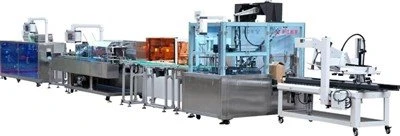
If you’re tired of manual stacking headaches, or your current machine is messing up stacks and costing you money, hit us up for a chat. We can walk through your specific product lines, show you how our machines would fit, and even send you a demo if you want. No pressure, just real talk about solving your stacking problems.
Automatic Cartoning Machine References
- Food and Drug Administration. (2022). Food Packaging Machinery Safety and Hygiene Guidelines. U.S. Department of Health and Human Services.
- Packaging Association of North America. (2023). Efficiency Metrics for Automated Carton Stacking Systems. PANA Technical Report Series.
- Smith, L. (2021). The Role of Alignment Sensors in Reducing Food Packaging Waste. Journal of Packaging Technology and Science.
- International Organization for Standardization. (2020). ISO 15751:2020 – Packaging Machinery – Safety and Hygiene Requirements for Cartoning Machines. ISO Press.
Zhejiang Tuoyu Packaging Machinery Co., Ltd.
Zhejiang Tuoyu Packaging Machinery Co., Ltd. is one of the most professional food cartoning machine manufacturers and suppliers in China. With abundant experience, we warmly welcome you to wholesale durable food cartoning machine made in China here from our factory. Good service and quality products are available.
Address: Workshop No.12, No.11-19, Xinbin Road, Binhai New Area, Pingyang County, Wenzhou City
E-mail: 15868789201@163.com
WebSite: https://www.tuoyupack.com/
