When I get asked “What is the communication range of the Four Leg Telecom Tower?” by potential customers, I never lead with a one-size-fits-all number. As a supplier who installs, maintains, and troubleshoots these towers every single week, I know the answer lives in the messy overlap of engineering science, local terrain, equipment choices, and even small details most people don’t think about. Let me break this down like I would for a small cell provider or a municipal telecom team that’s just starting to plan their network. Four Leg Telecom Tower
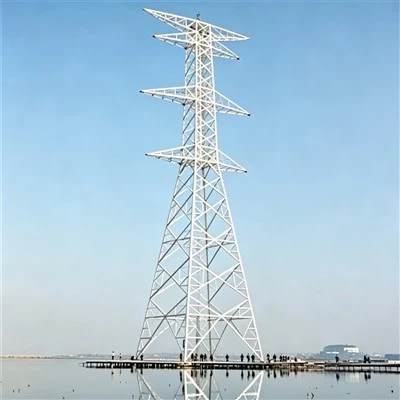
First, let’s start with what a four leg telecom tower actually is—because even some new network operators mix them up with monopoles or lattice towers. Four leg telecom towers are the sturdy, A-frame-style structures made of four vertical legs braced together with cross-members, usually 20 to 100 meters tall. They’re the workhorses of telecom infrastructure: less prone to sway in high winds than monopoles, easier to mount heavy antenna arrays on, and more durable in hilly or remote areas where wind speeds pick up. When a company comes to me asking about range, they’re almost always trying to figure out how many towers they’ll need to cover a neighborhood, a rural county, or a stretch of highway. That’s why context is everything here.
The baseline range I start with for a standard, properly built four leg telecom tower is roughly 35 to 45 kilometers for line-of-sight (LOS) communication. Wait, hold on—line-of-sight is a key term here. If you remember high school physics, radio waves travel in straight lines, right? So the curvature of the Earth limits how far those straight lines can go. For a tower that’s, say, 50 meters tall, the maximum LOS distance to the horizon is about 25 kilometers. That means even if your antenna is perfectly aimed at a receiver, if the receiver is behind a hill, a building, or a tree line, you won’t get that full 35 to 45 km number. But if you’ve got a tower on a hilltop, or you crank the antenna height up to 80 or 100 meters, the horizon jumps to around 35 km. Add in the gain of the antenna you mount on the four leg tower, and suddenly you can stretch that range a bit further—maybe up to 40 km, but only in areas with zero obstructions.
But here’s the thing: that LOS number is for a lot of backhaul communication, or older 2G and 3G signals. If we’re talking about modern 4G LTE or 5G, range drops because higher frequency signals don’t travel as far. Let me clarify that. Four leg telecom towers support multiple frequency bands, depending on what the client needs. For low-band 5G (sub-1 GHz), which is great for rural coverage, a standard four leg tower can have a range of up to 40 km, as long as there’s no major terrain blocking. Mid-band 5G (sub-6 GHz) is the most common for urban and suburban use, and that range drops to about 5 to 15 km. High-band 5G (mmWave) is for small, dense areas like downtown business districts, and that’s only up to 1 km, so you’d use smaller pole-mounted equipment instead of a full four leg tower for that. Most of my customers are either rural carriers needing low-band or mid-band, or municipal teams covering suburban areas with mid-band, so that’s where most of my recommendations land.
Now, I’ve seen clients get frustrated when their first tower doesn’t cover as much as they expected, and it almost always comes down to a few variables they didn’t account for. Let’s talk about terrain first. If you’re building a four leg tower in the Great Plains of the US, where there’s nothing but flat farmland and scattered trees, you’ll hit that 35 to 40 km range easily. But if you’re building in the Appalachian Mountains, and your tower is in a valley, a nearby ridge that’s 100 meters higher than your tower will block half your signal, cutting your range in half. Even small obstacles matter: a row of 20-meter-tall pine trees halfway between your tower and a receiver can eat up 10 dB of signal strength, which translates to losing 20% of your range. I had a customer in western Pennsylvania last year who tried to skip a terrain survey, and his first tower only covered half the neighborhood he wanted it to because of a hidden hill. That’s why I always recommend a free pre-installation site assessment before anyone pulls the trigger on a tower—we use LiDAR data to map terrain, tree cover, even existing buildings, so we can give a more accurate range estimate than just the baseline number.
Next, equipment choices on the four leg tower. The antenna is the biggest variable here. A standard omnidirectional antenna, which radiates signal equally in all directions, will have a wider overall range but lower gain. A directional antenna, which focuses signal in a narrow beam, will have a longer range in that specific direction, but shorter if you’re off the beam. We also do tower load calculations for every customer: if someone needs to mount a heavy 5G radio array that weighs 50 kg, that takes up less space for antennas, or requires a slightly taller tower, both of which can shift range. Backhaul also plays a role—if you’re using fiber backhaul, you can push more signal power, extending range, vs. microwave backhaul which might have more signal loss. I always work with my customers to pick equipment that balances range with their budget; a high-gain antenna might be $2,000 more, but it saves them from having to build a second tower 20 km away, so it’s worth it for most projects.
Weather and atmospheric conditions are another factor most people overlook. Radio waves can bend slightly in the atmosphere, which can extend range by a few km, especially during cool, dry weather in the fall. But heavy rain, snow, or even dense fog can absorb signal, cutting range by 10 to 15%. I had a customer in Minnesota last winter who reported his tower’s range dropped by 8 km during a blizzard, which is normal. That’s why our range estimates are based on average conditions, not extreme weather, and we always build in a 10% buffer for unexpected atmospheric losses.
Now, let’s talk about common use cases to put these numbers in perspective. For a rural internet service provider (ISP) covering a 1,000 square km county, four leg telecom towers are usually spaced 25 to 35 km apart, which lines up with the low-band 5G range. That works because each tower covers about 500 to 800 square km, so you can cover a whole county with 3 to 5 towers, instead of 10+ smaller poles. For a suburban municipal network, mid-band 5G towers are spaced 5 to 10 km apart, perfect for covering a 10 km x 10 km city. For highway coverage, which needs continuous signal along a stretch of road, four leg towers spaced 10 to 15 km apart along the shoulder work great, since you can aim directional antennas along the highway to avoid wasting signal on surrounding fields.
I should also mention the difference between communication range for the tower’s own signal vs. the devices that connect to it. A lot of customers ask, “How far can my phone be from the tower and still get service?” That’s a different number, because it depends on the phone’s transmitter power, not just the tower’s. Most modern phones can connect to a signal that’s at least -100 dBm, which translates to about 10 to 15 km for mid-band 5G, and up to 30 km for low-band 5G. Phones in rural areas are usually set to connect to the strongest signal, so you can get service from a tower a bit further than the antenna’s effective range, but the data speed will drop off. That’s why for high-speed internet, we stick to the 5 to 15 km range for mid-band, so customers get consistent speeds, not just a weak signal that can’t stream Netflix.
As a supplier, I’ve built four leg towers all over the US, and I can tell you that the answer to “what is the communication range” isn’t a static number. It’s a calculation that starts with the tower’s height, the frequency band, the antenna type, terrain, weather, and the client’s specific needs. I never give a hard number to potential customers without walking through these variables, because I don’t want them to be disappointed when their tower doesn’t perform as expected. For example, a four leg tower designed for a flat, remote area with low-band 2G will have a range of up to 45 km, while the same tower in a hilly suburban area with mid-band 5G will have a range of 8 to 12 km. Both are correct, depending on the context.
Now, if you’re planning to deploy a telecom network, whether it’s for rural broadband, public safety, or cellular service, getting the range right is critical to staying on budget. Building too many towers wastes money, building too few means poor coverage and lost customers. That’s why I always recommend starting with a site survey—we can bring in our team to map your terrain, run signal tests, and give you a custom range estimate for your specific project. We offer turnkey four leg telecom tower solutions, from design and construction to antenna installation and ongoing maintenance, so you don’t have to juggle multiple vendors.

If you’re tired of guessing at tower range and want a reliable, customized solution for your network, reach out to discuss your project needs. We work with small ISPs, municipal governments, and large national carriers alike, so no project is too big or too small.
Circuit Transmission Tower References:
- Federal Communications Commission. (2021). "Telecommunications Tower Design and Performance Standards". FCC Office of Engineering and Technology.
- International Telecommunication Union. (2019). "Radio Propagation Models for Terrestrial Telecommunication Networks". ITU-R Report P.1812-5.
- Telecommunications Industry Association. (2020). "Specification for Steel Self-Supporting Telecom Towers". TIA-222-G Standard.
Qingdao Hongyuanfeng Power Equipment Co., Ltd.
Hongyuanfeng is one of the most professional four leg telecom tower manufacturers and suppliers in China, also supports customized service. Please feel free to wholesale advanced four leg telecom tower in stock here from our factory. Good service and quality products are available.
Address: No.42 Fengwu Road, Beiguan Industrial Park, Jiaozhou City
E-mail: 13808970205@163.com
WebSite: https://www.hyfsteelpod.com/
