When I first started working as a high-temperature cable supplier 12 years ago, I had a customer call me in a panic at 2 a.m. Their industrial furnace had just gone offline, and the only part that failed was the cable connecting the heating elements to the power source. They’d spent thousands of dollars on emergency repairs, and the root cause? A process called arcing I’d explained to them a few weeks prior, but they’d brushed it off as “something that happens to other people.” That moment stuck with me because it’s not just about selling cables—it’s about making sure our customers understand why arc resistance isn’t just a technical spec, it’s the difference between their operations running smoothly and costly, unplanned downtime. High-temperature Cable
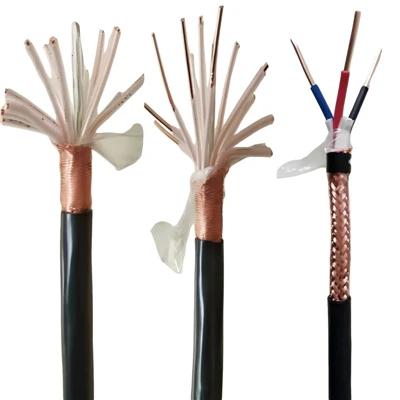
If you’re new to the world of high-temperature cables, or even if you’ve worked with them for years, arc resistance is a term you’ll see in every product datasheet, but not everyone breaks down what it actually means, especially when the cable has to survive 200°C, 500°C, or even 1000°C environments. Let’s start simple: an arc is a continuous, high-energy electrical discharge that jumps between two conductors, usually when there’s a gap in insulation, a faulty connection, or damage to the cable jacket. For standard cables, that arc would melt through the insulation in seconds, leading to short circuits, fires, or total system failure. But high-temperature cables have a different job. Their arc resistance is how long they can withstand that arc without failing—measured in seconds, right? Wait, no, not just any arc. The industry uses a specific test: you apply a controlled, high-voltage arc (usually around 15kV for low-voltage cables, depending on the standard) to the cable’s insulation or jacket, and time how long it takes for the arc to penetrate through the cable to the other side. The longer that time, the better the arc resistance.
Here’s where it gets specific for high-temperature applications, though. Most people think high-temperature cables only need to resist heat, but if they’re going to be used in steel mills, glass furnaces, aerospace engine components, or industrial kilns, they’re also dealing with constant electrical stress, moisture, dust, and yes, arcing. Let’s take a steel mill as an example: every time a ladle of molten metal is moved, the cables running to the crane’s power system are bouncing, rubbing against hot metal edges, and exposed to sudden power surges. A small nick in the insulation that goes unnoticed for a week can turn into a gap, leading to an arc. If the cable doesn’t have good arc resistance, that arc will burn through the jacket in 1 or 2 seconds, and the entire crane shuts down. A steel mill’s downtime costs them roughly $10,000 per minute, so you understand why arc resistance isn’t a “nice-to-have” spec—it’s non-negotiable.
What makes a high-temperature cable arc-resistant, anyway? It’s not one single material, it’s a combination of the insulation and jacket layers, the conductor design, and the overall manufacturing process. Standard high-temperature cables might use silicone rubber or cross-linked polyethylene (XLPE) for insulation, but those materials break down quickly when exposed to an arc. Arc-resistant high-temperature cables use specialized compounds, like ethylene propylene diene monomer (EPDM) modified with ceramic fillers, or polyimide (PI) films reinforced with fiberglass. When an arc hits these materials, they don’t just melt—they form a hard, ceramic-like barrier that insulates the conductors from further damage. That’s a game-changer. I’ve seen cables with ceramic-reinforced insulation withstand an arc for over 15 minutes, while a standard high-temperature cable would fail in under 5 seconds.
Another key factor is the cable’s voltage rating and its application. Arc resistance matters most in lower- and medium-voltage high-temperature cables, which are the ones used in most industrial heating systems. High-voltage cables have different insulation needs, but even they can benefit from arc resistance if they’re running in harsh environments. I once worked with a glass manufacturing plant that needed cables for their furnace control system. They initially quoted a standard high-temperature cable, but after our team tested a sample, we pointed out that their control system had a history of small power surges that caused arcing. The standard cable would have failed in 3 seconds; our arc-resistant version lasted 18 seconds. We didn’t just sell them a cable—we helped them avoid a potential furnace shutdown that would have cost them over $200,000 in lost production.
A common mistake I see customers make is confusing arc resistance with fire resistance. They think if a cable is fire-resistant, it’s automatically arc-resistant, and vice versa. That’s not true. Fire resistance means the cable can continue operating when exposed to a fire for a set period of time, usually 30 or 60 minutes. Arc resistance is about withstanding the electrical discharge before a fire even starts. For example, a fire-resistant silicone cable might burn slowly when exposed to flames, but if an arc hits it, the silicone melts right through. An arc-resistant cable doesn’t burn through, even when hit by that arc, so it prevents the fire from starting in the first place. They overlap sometimes—many good high-temperature cables have both properties—but they’re separate specs, and you need both if you’re working in a high-risk environment.
Let’s talk about the tests that actually measure arc resistance, because not all test standards are created equal. The International Electrotechnical Commission (IEC) has a standard, IEC 60331, which tests fire resistance, but the specific arc resistance test we use for high-temperature cables is IEC 61034, or sometimes UL 1581 for North American applications. What I like about these standards is that they’re consistent: they apply a 15kV arc to the cable’s insulation, at a specific temperature (we usually test at the operating temperature the cable will see, not just room temperature), and measure the time to penetration. That’s how we can say our cables have 120 seconds of arc resistance—we tested them under real-world conditions, not just in a lab with room-temperature samples.
I can’t tell you how many times I’ve had a customer say, “We’ve never had a problem with arcing before, do we really need arc-resistant cables?” My answer is always the same: every application is different, but the risk is always there. A food processing plant that uses high-temperature cables in their ovens might not think they need it, but if a wiring error leads to an arc, that could start a fire in the flour dust they’re handling. An aerospace company testing engine components at 800°C needs cables that won’t arc and fail mid-test, which could destroy a $1 million engine prototype. Arc resistance is about mitigating that risk before it turns into a disaster.
Another thing to consider is the long-term performance of arc-resistant high-temperature cables. I’ve seen customers buy cheap cables that advertise “arc resistance” but use inferior materials. After 6 months of operation, that “arc-resistant” jacket starts to crack from high heat and mechanical stress, and its arc resistance drops to almost nothing. Our cables are tested for long-term aging: we expose them to the operating temperature for thousands of hours, then re-test their arc resistance. We’ve found that after 10,000 hours at 400°C, our cables still have 90% of their original arc resistance, which is why our customers come back to us time and time again.
Let’s get specific with a real example from our work. Last year, a renewable energy startup reached out to us. They were building a new solar thermal plant, where they use molten salt to store heat and generate electricity. The cables for their salt processing system had to operate at 550°C, which is way hotter than most industrial applications. Their initial cable provider told them their standard high-temperature cables would work, but our team reviewed their design and pointed out that the salt processing equipment had frequent electrical surges that could cause arcing. We recommended our polyimide-fiberglass reinforced high-temperature cables, which have a rated arc resistance of 20 minutes at 550°C. They installed 20 km of our cables last quarter, and they haven’t had a single arcing-related issue. They told us they saved over $500,000 in potential downtime by switching to our arc-resistant cables.
If you’re working with high-temperature cables, whether you’re in industrial manufacturing, aerospace, energy, or any field where cables have to survive extreme heat and electrical stress, arc resistance is a spec you can’t afford to ignore. It’s not just a number on a datasheet—it’s a safety feature, a downtime prevention tool, and a way to protect your investment in equipment and operations.

I know choosing the right cable can feel overwhelming, especially with all the technical specs out there. If you’re not sure whether your current high-temperature cables have enough arc resistance, or if you need to upgrade to avoid future problems, our team is here to help. We can send you sample cables for testing, walk you through our spec sheets, and even help you design a cable solution that fits your exact operating environment. Don’t wait until an arcing incident costs you thousands of dollars in downtime—reach out to our team to discuss your high-temperature cable needs today.
Power Cable References
International Electrotechnical Commission. IEC 60331: Fire resistance of electric cables under fire conditions – Test methods.
International Electrotechnical Commission. IEC 61034: Measurement of smoke density of cables burning under defined conditions.
Underwriters Laboratories. UL 1581: Standard for reference wires, cables, and flexible cords.
ASTM International. ASTM D2863: Standard test method for measuring the minimum oxygen concentration to support candle-like combustion of plastics (oxygen index).
Anhui Huawang Cable Co., Ltd.
As one of the most professional high-temperature cable manufacturers and suppliers in China, we also support customized service. If you’re going to buy discount high-temperature cable, welcome to get pricelist from our factory. Quality products and reasonable price are available.
Address: No. 32, East Street, Batian Street, Datong Town, Tianchang City, Anhui Province
E-mail: Linda@huawangcable.com
WebSite: https://www.huawang-cable.com/
