As a supplier specializing exclusively in right angle and worm gearboxes, I get asked this question at least twice a week by maintenance teams, project engineers, and small business owners looking to upgrade their production lines, conveyor systems, or material handling setups: “Are these gearboxes actually easy to install?” Right Angle & Worm Gearboxes

My short answer is: It depends on a handful of key factors—nothing that’s out of reach for a skilled technician, and way simpler than most people assume when they first start researching gearbox solutions. Let’s break this down, from the basics of what makes these gearboxes unique, to the common pain points we see, to how we (as a supplier) work to make installation as smooth as possible for every customer.
First, let’s ground this in what right angle and worm gearboxes are, because a lot of confusion starts with mixing them up or not understanding their core design. Right angle gearboxes get their name from their input and output shafts being perpendicular to each other—instead of the inline parallel shafts you see in standard helical or parallel shaft gearboxes. This makes them perfect for tight spaces: if your motor is mounted on one side of a conveyor and the drive roller is on the other, a right angle unit eliminates the need for extra couplings, adapters, or extra length of shaft to turn a corner.
Worm gearboxes, on the other hand, use a worm (think of a threaded bolt) that meshes with a worm gear (a circular gear with angled teeth) to reduce speed and increase torque. A huge, often underrated benefit here is that they’re self-locking—once the input stops, the output can’t spin backward, which is ideal for lifts, hoists, or any application where gravity could pull a load down when power cuts out.
Now, about installation ease: Let’s start with why people might think these are hard to install. For a long time, cheaper, low-quality worm gearboxes on the market were made with imprecise machining, so the shafts and mounting surfaces were off by a fraction of a millimeter. That might not sound like much, but it meant technicians spent hours shimming, re-aligning, and fixing misalignment that wasn’t their fault. Or, older right angle units required custom adapters to fit standard NEMA or IEC motor frames, which added time and cost to every job.
But that’s not the case with the gearboxes we supply—and it’s not the case with most modern, purpose-built right angle and worm gearboxes for industrial use. Let’s talk about standardization first. We design every gearbox we sell to match global motor frame standards: NEMA for North America, IEC for Europe and most of Asia. That means if you have a standard 56C NEMA motor you’ve used on past projects, it bolts straight to our right angle gearbox flange in 10 minutes max, no custom parts needed. For worm gearboxes, the output shafts are precision-ground to match standard keyway sizes, so fitting sprockets, pulleys, or drive couplings is straightforward—no modifying shafts or ordering custom components on the fly.
Next, mounting flexibility. Right angle gearboxes have four common mounting options: foot-mounted, flange-mounted, face-mounted, and hollow-shaft. Let’s take a hollow-shaft right angle unit, for example—this is the most popular for conveyor roller drives. Instead of attaching a coupling to connect the gearbox output to the roller shaft, you slide the roller shaft directly through the hollow output of the gearbox, set a couple of set screws, and you’re done. No misalignment from couplings, no extra parts, and the whole install takes half the time of a parallel shaft setup. Worm gearboxes offer similar flexibility: we often see them mounted foot-down for tilt hoppers or flange-mounted for conveyor systems, and all our mounting surfaces are machined flat within 0.02mm, so you don’t have to spend hours adjusting shims to get the gearbox sitting level.
That said, there are still some best practices to follow for smooth installation, and that’s where our support as a supplier comes in. The biggest mistake we see technicians make is not accounting for alignment, even with standard units. Even a perfectly machined gearbox can run hot or wear out early if the motor and gearbox shafts aren’t aligned within 0.05mm. But here’s the good news: we don’t just sell gearboxes and walk away. Every unit we ship comes with a 1-page, step-by-step installation guide—no jargon, just clear, numbered instructions: how to measure shaft alignment, how to torque mounting bolts to the correct specification (too tight can crack the housing, too loose causes vibration), and how to check the oil level before first start-up. For customers who are new to working with right angle or worm gearboxes, we also offer free 15-minute virtual walkthroughs: hop on a call with our technical team, show us your motor and setup, and we’ll walk you through exactly how to mount and connect your specific model.
Another common question: what about retrofit jobs? If you’re replacing an old gearbox in an existing line, is that easier? Almost always, because modern right angle and worm gearboxes are designed to be drop-in replacements. We recently worked with a food processing plant in the Midwest that needed to replace 12 old worm gearboxes driving their packaging line’s conveyor. The old units were 20 years old, with custom mounting flanges that had rusted and warped. Our sales team sent a technician to measure the exact footprint, shaft size, and mounting bolt pattern of each old unit, and custom-machined adapters for our standard worm gearboxes that bolted straight in. The whole retrofit took 4 hours per unit, instead of the 8 hours per unit the plant had budgeted for, because there was no need to modify the existing frame or mounting points. That’s the kind of value we focus on—making installations fit your space, not the other way around.
Wait, but what about applications where access is tight? Let’s say you’re installing a gearbox in a ceiling-mounted crane, or a conveyor in a narrow basement. Right angle gearboxes are designed for that. Their compact, L-shape means they fit into spaces where inline gearboxes won’t. We supply a lot of units for agricultural equipment too: farmers install right angle gearboxes on grain augers and feed conveyors, where space is limited and they don’t have the luxury of extra time on installation. Those units are sealed for life (we offer both lubricated-for-life units and refillable ones, depending on the application) so there’s no need to top up oil during install, and their small size means one person can lift and mount them, no extra equipment needed.
Of course, no gearbox is completely installation-free. If you’re a brand-new technician who’s never worked with gearboxes before, you might want to pair the install with a quick training session. That’s why we offer that virtual support I mentioned, and we also have a library of free how-to videos on our site: how to mount a hollow-shaft right angle gearbox, how to align motor and gearbox shafts, how to perform a quick post-install check. We even have a customer who runs a small fabrication shop in Texas that hires part-time technicians for rush jobs—they use our videos to train new hires, which cuts down on errors and install time by 30% compared to when they used generic gearbox guides from other suppliers.
Let’s talk about common mistakes that make installation harder, because that’s something we help customers avoid. One big one is mixing up left-hand and right-hand worm gears. Worm gearboxes have a direction of rotation that’s specific to the worm thread, so if you order a unit that’s designed for clockwise rotation and you need counterclockwise, you can’t just reverse the motor—you have to order a different worm gear. That’s why we make it a point to ask customers for their exact required rotation and torque specs when they order, so we ship the right unit the first time, no delays during install. Another mistake: using the wrong torque on mounting bolts. Too loose, and the gearbox can shift, causing vibration that wears out shafts. Too tight, and you can crack the cast iron housing that most of our units are made from (we also offer aluminum housings for light-duty applications, which are lighter but equally durable). Our guides list the exact torque spec for every model, so you don’t have to guess.
I should also mention that ease of installation ties directly to long-term performance, which is a big selling point for right angle and worm gearboxes. When you install one correctly, it runs quietly, has low maintenance requirements, and lasts for 10+ years in most industrial applications. We did a follow-up call last year with a customer who installed 50 of our right angle gearboxes in a distribution center’s sorting system 8 years prior. They said the install took 20 minutes per unit on average, because all the flanges and shafts fit standard motors, and none of them have needed a single part replacement since. That’s the kind of reliable install we want every customer to experience.
So to circle back to the original question: Are right angle and worm gearboxes easy to install? The short answer still is yes—if you choose a supplier that designs units for standardization, offers clear support, and helps you avoid common pitfalls. If you go with a cheap, off-brand unit that’s made with imprecise machining, installation will be frustrating. But with high-quality, purpose-built units from a supplier that understands real-world install challenges, it’s one of the simpler parts of setting up your drive system.
Every project is different, of course. If you’re working on a custom setup with non-standard mounting points, or a unique application like a marine conveyor that needs corrosion resistance, we can adapt our units to fit. We work closely with every customer before they order to confirm shaft sizes, rotation, mounting options, and any custom needs, so you don’t run into surprises on install day.
For anyone planning an upcoming project that uses right angle or worm gearboxes, the best first step is to reach out to our team. We don’t push generic solutions—we ask questions about your application, your space, your timeline, and your budget, then recommend the gearbox that’s easiest to install for your specific setup, not just the most expensive or most popular model. Whether you’re replacing a single old gearbox or outfitting an entire new production line, we’ll help make the install as smooth as possible.
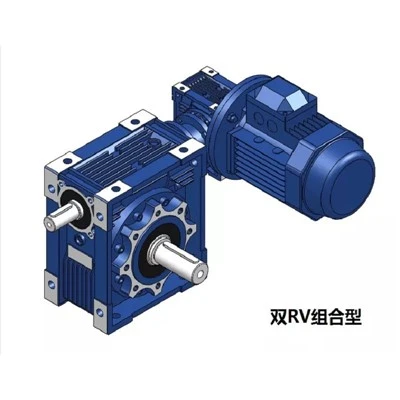
If you’re ready to discuss your next project and get tailored guidance on the right angle or worm gearbox for your needs, get in touch with our team to connect for a consultation.
Right Angle Bevel Gear Reduction Motor References:
- Gear Technology Magazine. (2022). “Installation Best Practices for Right Angle and Worm Gearboxes.”
- American Gear Manufacturers Association (AGMA). (2021). “Standardized Mounting Specifications for Industrial Gearboxes.”
- Industrial Maintenance & Plant Operation Magazine. (2023). “Reducing Gearbox Retrofit Time with Precision Machining.”
- International Organization for Standardization (ISO). (2020). “ISO 9409: Mounting Dimensions for Worm Gear Units.”
GuangDong Ruisico Transmission Technology Co., Ltd.
Guangdong Ruisico Transmission Technology Co., Ltd. is one of the most reliable right angle & worm gearboxes manufacturers and suppliers in China, also supports customized service. Welcome to buy durable right angle & worm gearboxes made in China here and get quotation from our factory. For price consultation, contact us.
Address: No. 70, Anjing Road, Shengfeng Community, Xiaolan Town, Zhongshan City
E-mail: info@risc-drive.com
WebSite: https://www.risc-motor.com/
