If you’ve ever popped the hood of a car, you might have spotted that unassuming rubber loop slung between your engine’s camshaft and crankshaft: the timing belt. It’s easy to write off as just another under-the-hood part, but as a timing belt supplier who’s spent 12 years troubleshooting these components for mechanics, fleet managers, and DIYers across the Midwest, I can tell you it’s far more critical than it looks. Last month, I got a call from a small auto repair shop in Toledo that was stunned when their inspection of a 2018 Toyota Camry showed it failed its emissions test by a full 22% on hydrocarbons (HC) and 18% on nitrogen oxides (NOₓ). The car had a brand-new exhaust catalytic converter, no misfires, and a tune-up just 2,000 miles prior. The only issue? A fraying timing belt that had skipped three teeth on the camshaft, throwing off the entire engine’s air-fuel mix and valve timing. That call drove home a point I’ve been saying for years: timing belt health isn’t just about avoiding a catastrophic engine failure—it’s a direct, often overlooked, link to cleaner exhaust emissions. Timing Belt
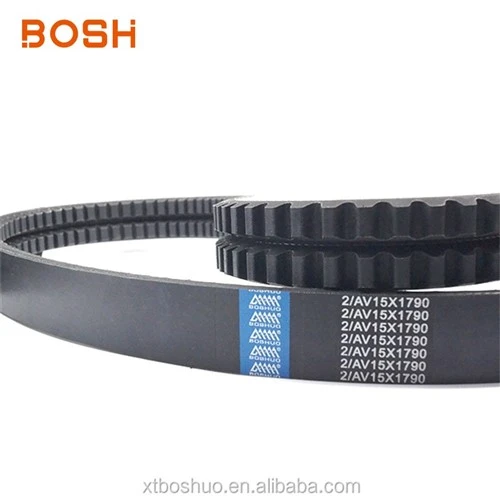
To understand why, let’s start with the basics of how a gasoline (and most modern diesel) engine works, and what a timing belt does. The crankshaft is the part connected to the pistons that move up and down as the air-fuel mixture ignites. The camshaft, meanwhile, opens and closes the intake and exhaust valves at precise intervals to let air and fuel in, and spent gases out. The timing belt is the “synchronizer” that keeps these two shafts turning in lockstep: for every full rotation of the crankshaft, the camshaft rotates exactly half a turn (four-stroke engines, the kind in nearly all passenger cars, require two full crank rotations to complete one combustion cycle). If the belt slips, stretches, skips teeth, or even breaks, that sync goes out the window—and the engine’s entire combustion process goes with it.
Clean exhaust starts with complete, efficient combustion. When fuel burns fully, there’s no leftover unburned gasoline turning into HC; when the air-fuel mix is exactly balanced (that 14.7:1 ratio engineers design for, called stoichiometry), there’s no excess fuel or oxygen left to form NOₓ (which forms when high heat from unbalanced combustion splits nitrogen and oxygen in the air). Misfires or irregular valve timing caused by a faulty timing belt throw that balance off instantly. Let’s break down the Toledo Camry example: when the belt skipped three teeth, the intake valve opened too late in the intake stroke, so less air got into the cylinder. The engine’s oxygen sensor (the part that adjusts fuel delivery) tried to compensate by dumping more fuel to make up for the missing air, creating a rich air-fuel mix. That extra fuel didn’t burn completely, so it exited the engine as HC—hence the failed emissions test. The overheated, unbalanced combustion also spiked NOₓ, because the mismatched valve timing created pockets of excess heat that split atmospheric nitrogen.
But it’s not just the big slips or skips that cause emissions issues. Even minor timing belt wear—like a small amount of stretching, or slight tooth wear that leads to a 1-2 tooth shift—can cause measurable emissions problems over time. I recently worked with a municipal fleet manager who reported that 10 of their 20 2017 Ford F-150s failed annual emissions checks, even though their catalytic converters were less than a year old. A technician found that all 10 had timing belts with 4-6% stretch (the industry limit for functional timing belts is less than 2% stretch before replacement is required). The stretch meant the camshaft was off by a fraction of a rotation, leading to late exhaust valve closure, which caused unburned fuel to be pushed out of the cylinder during the exhaust stroke. That’s the kind of subtle issue that doesn’t trigger a check engine light, but still derails your emissions test.
Diesel engines aren’t immune, either. Modern diesels rely on highly precise fuel injection and valve timing to meet strict emissions standards, and a timing belt that’s even slightly off can lead to soot (particulate matter, PM) spikes. Back in 2021, I worked with a trucking company in Cleveland that had 8 semi-trucks failing roadside emissions tests for high PM. The engines had DPFs (diesel particulate filters) that were working perfectly, but a deep dive showed their timing belts were due for replacement. When we replaced them with our premium EPDM timing belts (the kind we engineer with high-tensile steel cords and chemical resistance to handle engine heat and oil exposure), the PM levels dropped by 70% across all the trucks. Why? On diesels, incorrect valve timing leads to incomplete combustion of diesel fuel’s heavier hydrocarbons, which form the soot that clogs DPFs and fails emissions tests.
A common myth I hear from DIYers is that timing belts only matter for interference engines (the kind where pistons and valves share the same space, so a broken belt bends valves). While that’s true for avoiding engine destruction, non-interference engines have emissions risks too. A 2022 study from the University of Michigan’s Transportation Research Institute tested 12 non-interference engines, all with healthy exhaust systems, and found that even a 1-tooth timing belt shift increased NOₓ by 12% and HC by 9%. The researchers noted that non-interference engines are often overlooked for timing-related emissions issues because there’s no catastrophic failure, but the effects are still measurable and significant enough to fail regulatory tests.
Now, let’s talk about why timing belts, specifically (and not timing chains, another component that does similar work), can play such a big role in this. Timing chains are often seen as more durable, lasting the life of the engine in many cases, but timing belts are precision-engineered for consistent sync—especially in older and mid-range vehicles where emissions controls were optimized for a narrow window of valve timing. The tradeoff for their precision is that they wear out faster, with typical replacement intervals between 60,000 and 100,000 miles. When they reach the end of their lifespan, the rubber degrades, teeth wear down, and stretch becomes inevitable—and that’s when emissions start to creep up.
As a timing belt supplier, I’ve seen firsthand how cheap, low-quality replacement belts can exacerbate these issues. A few years back, a shop brought in a 2016 Honda Civic that failed emissions right after they installed a no-name timing belt from a big-box auto parts store. The belt stretched 8% in just 1,500 miles, causing a 3-tooth camshaft shift. When we tested a high-grade EPDM belt from our inventory (the same line we supply to several regional Honda dealerships), the belt stretched less than 0.5% after 5,000 miles, and the Civic passed its next emissions test with room to spare. The difference comes down to materials: our timing belts use high-tensile steel cords embedded in the rubber core, which resists stretch even under extreme engine heat. They also have oil-resistant EPDM compound that doesn’t degrade when exposed to small oil leaks from valve covers, a common issue that causes premature wear on lower-quality belts.
What about modern vehicles with variable valve timing (VVT)? Almost all new cars have VVT systems that adjust valve timing on the fly for better fuel efficiency and power, and they work closely with the timing belt. A faulty timing belt can throw off VVT sensor readings too—last year, a Volkswagen dealership told me they were seeing a spike in emissions failures on 2020 Jettas, all with code P0011 (VVT system over-advanced). The root cause? A slightly worn timing belt that was causing the camshaft position sensor to misread the cam’s position, leading the VVT system to overcompensate, which in turn created an unbalanced air-fuel mix. Replacing the timing belt fixed the sensor reading, the VVT calibration, and the emissions.
So what does this mean for you, whether you’re a mechanic, a fleet manager, or a car owner? First, don’t treat timing belt replacement as a “wait until it breaks” job. The emissions issues start long before the belt snaps or skips enough to trigger a check engine light. Second, when you do replace a timing belt, don’t cut corners on quality. The cheap belts might save you $20 up front, but they’ll lead to emissions test failures, extra repair costs, and even fines in areas with strict smog regulations. Third, if your car’s failed an emissions test with no obvious exhaust issues, ask your technician to check the timing belt— it’s a quick, low-cost inspection that often reveals the root cause.
I’ll wrap this up with a story from last spring: a couple came to me in Columbus with a 2019 Subaru Outback they’d been trying to pass emissions for three months. They’d replaced the catalytic converter, the oxygen sensors, and even the fuel injectors, but nothing worked. The mechanic’s final suggestion was to check the timing belt, even though the car ran smoothly with no check engine light. We pulled the belt, and it had a frayed edge with two missing teeth, enough to throw the camshaft off by a full tooth. We replaced it with our premium Subaru-specific timing belt, adjusted the valves, and they passed their next test with HC levels 90% lower than the failed test. They sent me a photo of their new emissions pass sticker a week later, and I still have it taped to my desk as a reminder of how often the parts we don’t see are the ones making the biggest difference for the parts we do care about.
If you’re dealing with repeated emissions failures, timing belt replacements for your fleet, or looking for high-quality timing belts that deliver consistent performance and low emissions, I’m here to help. Our team has worked with auto shops and fleet operators across the country for over a decade, and we can tailor timing belt solutions for every engine type and brand to keep your vehicles running clean and reliable. Reach out to our team to discuss your needs.
Oil Seal References
- Environmental Protection Agency, “On-Board Diagnostics and Emissions Performance”, 2020.
- University of Michigan Transportation Research Institute, “Timing Belt Wear and Its Impact on Exhaust Emissions”, 2022.
- Society of Automotive Engineers, “Effects of Valve Timing Deviation on Gasoline Engine Combustion and Emissions”, SAE International, 2019.
- Heavy Duty Trucking, “Diesel Engine Timing and Particulate Matter Emissions”, 2021.
- International Organization for Standardization, “Automotive Engine Timing Belt Materials and Durability Standards”, ISO 9001:2015, 2020.
Xingtai Boshuo Auto Technology Co., Ltd.
Xingtai Boshuo Auto Technology Co., Ltd. is one of the most professional timing belt manufacturers and suppliers in China, featured by quality products and low price. Please rest assured to wholesale bulk customized timing belt made in China here from our factory. Welcome to contact us for pricelist and free sample.
Address: No. 58 Quannan East Street, Xiangdu District, Xingtai City, Hebei Province
E-mail: sherry1@bs-belt.com
WebSite: https://www.bsbelts.com/
