If you’ve ever stood in a hardware aisle, a baby gear store, or a kitchen supply shop, staring at rows of silicone accessories—spatulas, bottle nipples, phone cases, food storage lids—you’ve probably wondered the same thing: What makes one silicone accessory worth buying, and another one not? As someone who’s spent the last 8 years running a small silicone accessories manufacturing and supply business, I’ve fielded this question at trade shows, over email, and even from friends who found a cheap spatula online and swore it melted halfway through a batch of chocolate chip cookies. It’s not just a “feel good” or “looks nice” check—good quality silicone isn’t a marketing buzzword; it’s about safety, durability, and performance. Over the years, I’ve developed a list of practical, science-backed checks I share with every customer, whether they’re a café owner bulk-buying spatulas or a parent picking sippy cups for their toddler. Let’s break down what actually matters, no fancy jargon required. Silicone Accessories
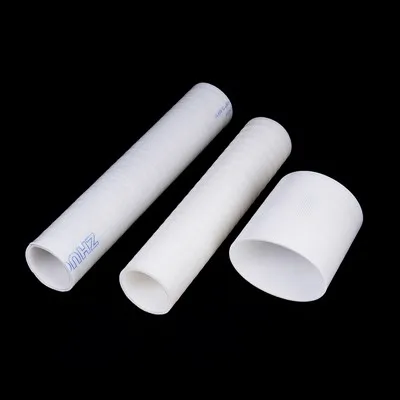
First, let’s start with the basics: what silicone actually is, because that’s where quality begins. Silicone is a polymer made from silicon, oxygen, carbon, and hydrogen atoms, and it comes in different grades. The two big ones most people run into are food-grade silicone (the type for cooking, baby products, and food storage) and industrial-grade silicone (used for things like gaskets, car parts, and insulation). This is the first red flag to check: if an accessory doesn’t specify its grade, it’s likely not high quality. Industrial-grade silicone often has additives that are fine for sealing a water heater but not meant to touch food, skin, or daily use items. For example, a low-quality silicone spatula I tested once (I keep bad samples around to show customers) smelled like chemicals when I pulled it out of the packaging, not the subtle, almost neutral smell that good silicone has. That chemical odor is usually from unprocessed residual monomers or extra additives that never got fully cured—those are the same substances that can leach into food over time, especially when exposed to heat.
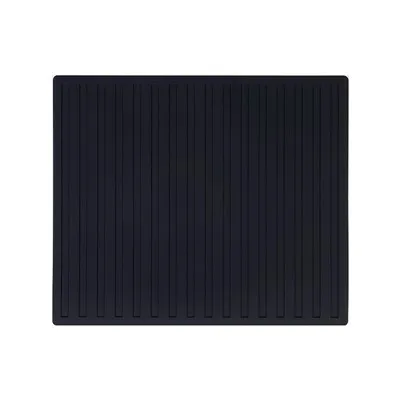
Curing is the next key part, and it’s a step that makes or breaks silicone quality. Curing is the process of heating the silicone to let the polymer cross-link, turning it from a gooey liquid into a solid, flexible material. If silicone isn’t cured properly—either because the manufacturer cut corners on temperature or time—it stays under-crosslinked. What does that look like in real life? It’s an accessory that’s sticky to the touch, or that stretches out of shape easily when you pull it gently. I remember a customer from a small bakery who bought a set of 10 silicone baking mats for a great price, only to find that after two uses, the mats were wrinkled and the edges curled up so bad she couldn’t fit a baking sheet under them. When she sent me a sample, I noticed it stretched nearly twice its original length before snapping, whereas our standard baking mats stretch less than 10% of their size and snap back instantly. That snap-back is called resilience, and it’s a direct result of proper curing. Good quality silicone will always snap back to its original shape quickly; low-quality cured silicone stays deformed, which means it’s wearing out faster and will need to be replaced sooner.
Next, let’s talk about temperature resistance, and this is where testing matters more than any label. I’ve seen silicone spatulas labeled as “heat resistant up to 500°F” that melt when stirred in a pot of boiling sugar (around 350°F). That’s because many manufacturers will inflate their temperature ratings, or test the silicone in ideal conditions, not real life. The real test for temperature resistance is simple: take a small piece of the accessory (most suppliers will give you a sample for testing) and put it in boiling water (212°F) for 10 minutes, or hold it over a stovetop burner on low heat for 5 seconds. If it warps, melts, or leaves a sticky residue, that’s not quality silicone. Good silicone, even when heated, shouldn’t warp or leave a residue. I also test our silicone products in our own quality lab (it’s not fancy—just a few stovetops and a set of thermometers) to make sure they can handle repeated use at high temperatures without breaking down. For example, our baby bottle nipples are tested to withstand dishwasher cycles and repeated boiling for sanitization, because that’s what parents actually do, not what a lab tester in a controlled room does.
Then there’s the “feel” test, but not the soft, squishy kind you’d use for a stress ball—this is about texture and flexibility. Good quality silicone has a consistent, matte finish, not a shiny or glossy surface that feels slippery. Wait, let’s clarify that: some silicone products are coated, but that’s a separate step. The raw silicone itself shouldn’t have a plastic-like sheen. If you run your finger across a high-quality silicone spatula, it should feel smooth, almost like a well-used kitchen tool, not like a new plastic toy. Flexibility is another part of this: a good silicone mat should be flexible enough to roll up for storage, but not so soft that it folds over itself when you’re trying to slide cookies onto it. I’ve had customers tell me they bought silicone food storage bags that twist shut too easily, so they leak, and that’s because the silicone was too soft from cheap fillers. Good silicone has a balanced flexibility: it bends when you need it to, but it doesn’t give in when you apply gentle pressure. That balance comes from the ratio of polymer to filler, another thing that separates high and low quality silicone. Cheap manufacturers often add cheap fillers like calcium carbonate to cut costs, which makes the silicone stiffer, more prone to cracking, and more likely to leach over time. Good suppliers use minimal, non-toxic fillers (if any) and stick to a high ratio of silicone polymer, which is the expensive part, but worth it in the long run.
Let’s not forget durability and how it holds up over time, not just the first week. I’ve had customers come back after a year of using our silicone baking mats and say they still look almost new, no stains, no rips, no cracks. I’ve also had a customer buy a different brand’s mat that tore after 3 months, just from sliding a cookie sheet across it. How do you test for that? The scratch test is a simple one. Take a coin or a metal utensil (something hard) and gently scrape the surface of the silicone accessory. Good quality silicone will either not scratch at all, or leave a very faint mark that you can rub off with your finger. Low-quality silicone will scratch easily, leaving deep, visible marks that can hold food residue and bacteria over time. That’s a big deal for kitchen products, because bacteria love to hide in deep scratches. Another durability test: put the accessory in the freezer for 2 hours, then take it out and bend it sharply. If it cracks or breaks, that’s a sign of poor quality silicone. Good silicone is flexible and durable in both hot and cold temperatures, which is why it’s used for everything from ice cube trays to oven mitts.
Wait, there’s one more thing that’s often overlooked: recyclability and long-term safety, not just the short-term. As a supplier, I’ve started asking customers if they care about this, because more and more people do. Good quality silicone is not toxic when disposed of properly, and it doesn’t release harmful chemicals when it breaks down over time (it’s not plastic, which breaks down into microplastics). Low-quality silicone, with all those extra fillers and unprocessed monomers, can release harmful chemicals like formaldehyde or phthalates when it’s heated or worn down. That’s why I always recommend asking the supplier for a material safety data sheet (MSDS) or a test report from a third-party lab. Any reputable supplier will have these on hand, no questions asked. If a supplier hesitates or can’t provide proof that their silicone is free of harmful chemicals, that’s a big red flag.
I’ve learned over the years that most customers don’t want to overspend on silicone accessories—they want a product that works, lasts, and is safe. I’ve had customers compare our silicone spatulas to ones from big box stores that are half the price, and I always tell them: if the cheaper one lasts 3 months and ours lasts 2 years, you’re actually saving money. That’s not a sales pitch; that’s just the reality of quality materials. I’ve seen too many customers get burned by cheap silicone accessories that break, smell bad, or even leach chemicals into their food, and that’s what made me start writing this post.
So to sum it all up, the key checks for good quality silicone accessories are: first, check the grade (avoid unlabeled industrial-grade for any product that touches you, your food, or your kids). Second, do the smell test—good silicone has a neutral or very light, almost non-existent smell; chemical smells mean unprocessed residues. Third, do the shape test—good silicone snaps back to its original shape instantly; low-quality stays deformed. Fourth, test temperature resistance with boiling water or gentle heat to make sure it doesn’t warp or melt. Fifth, do the scratch test to make sure it’s durable and won’t hold bacteria. Sixth, ask for third-party test reports to confirm safety.
If you’re a bulk buyer, a small business owner, or just someone looking for long-lasting, safe silicone accessories, these checks will help you cut through the marketing buzzword and pick products that actually deliver. As a supplier, I stand by every product we make, and I encourage anyone who’s curious about our quality to reach out. We’re always happy to send samples for testing, answer questions about our manufacturing process, and work with customers to find the right silicone accessories for their needs. Whether you’re stocking a café, outfitting a nursery, or just replacing a worn-out kitchen tool, quality silicone is an investment that pays off for years.
Silicone Toys References
American Chemical Society. (2021). Silicone Polymers: Properties and Applications. ACS Publications.
Food and Drug Administration. (2022). Safety of Silicone Food Contact Materials. FDA.gov.
International Organization for Standardization. (2019). ISO 10993: Biological Evaluation of Medical Devices. ISO.
Dongguan Hengyue New Material Technology Co., Ltd.
As one of the most professional silicone accessories manufacturers and suppliers in China, we also support customized service. We warmly welcome you to wholesale bulk cheap silicone accessories from our factory. If you have any enquiry about quotation and free sample, please feel free to email us.
Address: Building 2, No. 3, Yindou Third Road, Qingxi Town, Dongguan City, Guangdong Province
E-mail: dghengyue@126.com
WebSite: https://www.hengyuesilicone.com/
