Hey there,
Ever found yourself Googling “rubber end gaskets cost” at 9 PM, half-way through a project, thinking there’s gotta be more to this number than just a random price per piece? I totally get it. As a rubber end gasket supplier, I hear this exact question every single day—from small workshop owners panicking about a custom prototype order to big manufacturing directors cross-checking their annual component budgets. Most folks assume it’s a straightforward “it’s $X each” deal, but trust me, that price tag’s hiding a whole bunch of factors no one tells you about until you’re waist-deep in a delayed order or a surprise cost overrun. Let’s break this down like we’re chatting over coffee, no corporate jargon, just the real stuff I deal with week in and week out. Rubber End Gasket

First off, let’s get one thing straight: rubber end gaskets aren’t a one-size-fits-all widget. You can’t compare a tiny 1-inch gasket for a home plumbing pipe to a 2-foot heavy-duty one for a industrial chemical processing tank and expect the same cost. The first, biggest driver of price is the rubber material itself. I work with four main rubber types, and each has a totally different price tag, plus their own use cases that make sense for different jobs.
Let’s start with natural rubber (NR)—this is the go-to for general-purpose stuff, like water tanks, consumer appliances, or low-pressure HVAC lines. It’s flexible, cheap to source, and holds up pretty well against mild water, sunlight, and basic chemicals. Right now, natural rubber’s sitting at around $1.20 to $2.50 per linear foot, and a standard small end gasket (say, 2-3 inches) works out to like $0.15 to $0.40 each. That’s the budget option, perfect if you’re not dealing with harsh conditions.
But if you’re working with something harsher? Like fuel, oil, or aggressive cleaning chemicals? Natural rubber won’t cut it. You’ll need nitrile rubber (NBR)—oil-resistant, tough, way more durable in petroleum-based environments. Nitrile’s more expensive than NR, obviously. Linear foot runs around $2.80 to $4.50, so a standard gasket here is $0.35 to $0.80 each. I recently had a customer in the automotive parts shop who needed these for fuel lines, and they swore by nitrile—said it saved them from replacing gaskets every 6 months, which was worth the extra cost.
Then there’s EPDM, which is the star of outdoor or extreme temperature jobs. If your gasket’s going on a rooftop HVAC unit, a swimming pool filter, or something that sits in direct sun and -20 to 200°F temps? EPDM’s your guy. It’s weather-resistant, doesn’t crack from UV exposure, and handles temperature swings way better than NR or NBR. EPDM’s linear foot is $3.20 to $5.20, so a standard gasket’s $0.40 to $0.95 each. I had a pool equipment manufacturer place a bulk order last year, and they told me EPDM cut their warranty claims by 70%—that’s a cost saver long-term, even if the upfront per-piece price is a bit higher.
Wait, and then there’s the heavy hitters: silicone and fluorocarbon (Viton). Silicone’s for extreme temps (-100 to 400°F), used in food processing, medical equipment, or high-heat appliances like oven gaskets. Viton’s for the absolute worst—strong acids, super high heat, aerospace or chemical processing. These two are way pricier. A linear foot of silicone is $6 to $9, so a small gasket is $0.75 to $1.30, and Viton’s $12 to $20 per linear foot, with a small gasket running $1.50 to $2.50 each. I don’t sell a ton of Viton, but when I do, it’s always for projects where the gasket failure would be a huge safety hazard—no cutting corners there.
Okay, so material’s the big one, but that’s not all. Next up: size and complexity of the gasket. If you need a tiny, plain, round gasket for a pressure gauge, that’s easy to mold, cheap to make. But if you need a custom shape—like a rectangular gasket for a industrial valve, or one with notches, holes, or特殊 features (wait, no, just standard features, like mounting holes, or a lip to fit into a specific housing) —that adds cost. Also, size matters a lot. A 1-foot diameter heavy-duty gasket for a pipeline? That’s way more material, way more mold time, way more shipping cost than a 2-inch one. A 1-foot EPDM gasket that’s plain would be $12 to $18 each, no problem. If it has 8 mounting holes, that adds another $2 to $3 per piece because drilling those holes post-mold isn’t cheap.
Then there’s order volume. This is where I see the biggest gaps. Someone who needs 100 gaskets is gonna pay way more per piece than someone who needs 100,000. It’s basic economies of scale, right? I tell all my new customers: if you’re ordering less than 500 pieces, you’re looking at the higher end of the per-piece price. 500 to 5,000, that’s a 10-15% discount. 5,000+? We can knock 20-30% off, even more if it’s a repeat order. Last quarter, a construction company needed 12,000 nitrile gaskets for a municipal water project—they paid like 25% less per piece than a local plumber who ordered 100 of the same gasket a week later. That’s just how it works.
Mold costs are another hidden one, especially for custom gaskets. If you need a totally unique shape that doesn’t exist in our existing molds, we have to cut a custom mold. Mold costs vary—simple round molds are $200-$500, but complex custom shapes with multiple parts, holes, or textured surfaces can run $1,500 to $5,000, sometimes more. And those mold costs are usually either added to your first order or rolled into per-piece pricing if you’re doing a big enough run. I always tell customers: if your order’s under, say, 1,000 pieces, the mold cost might not make sense—better to go with an existing shape that’s close. But if you’re doing 5,000+ and the custom shape cuts down on installation time (like, no extra drilling for holes), that mold cost is totally worth it in the long run.
Wait, and then there are other factors: certifications, lead times, and special packaging. If you need FDA-certified rubber for food or medical use, that’s a whole extra step—testing the material, proving it meets food safety standards, which adds 10-20% to the material cost. If you need a rush order? Like, you need 1,000 gaskets in 2 days instead of the usual 7-10? We charge a 20-50% rush fee, because we pull our production team off other jobs to get your order done fast. And special packaging—like vacuum-sealed gaskets to stop them from sticking, or packaging labeled for specific industries—adds a few cents per piece, but matters for some customers.
Let me give you a real example to make this concrete, because numbers can get fuzzy. Last month, I had two customers asking for identical end gaskets for 4-inch diameter pipe flanges. First guy was a small local plumber, ordered 100 EPDM gaskets. He needed them in 5 days. So his cost per piece: $0.90 (material) + $0.10 (simple cut edges) + $0.05 (small rush fee) = $1.05 each, total order $105. Second customer was a regional construction firm, ordered 12,000 of the same exact gasket. They had no rush, already had our approved mold for that 4-inch size. Their cost per piece: $0.90 (material) – $0.27 (volume discount) = $0.63 each, total order $7,560. See the difference? Same exact gasket, totally different cost based on who’s buying how much and when.
I also wanna be honest about common misconceptions here. A lot of people think “cheaper is better” when it comes to rubber end gaskets, but that’s a trap. I’ve seen plumbers buy super cheap natural rubber gaskets for hot water lines, only to have them crack in 2 months, leading to a pipe leak, water damage, and a $5,000 repair bill. The extra $0.20 per gasket would’ve saved them thousands. That’s why I always walk customers through their specific use case—no pushing the most expensive stuff, just what’s gonna work for their job, at a price that makes sense.
Another thing to note: sometimes people ask for “price matching” with online retailers, but a lot of those online gaskets are low-grade rubber, cut corners on material quality, so they’re cheaper for a reason. I sell industrial-grade gaskets, tested for durability, that won’t fail unexpectedly. That’s a value add you don’t see in the per-piece number at first, but it’s a huge difference in the long run.
So, putting it all together: if you’re looking for a standard, 2-inch natural rubber end gasket, order 100 pieces? You’re looking at $0.15 to $0.25 each. If you need a custom 1-foot EPDM gasket for outdoor use, order 5,000 pieces? Around $0.80 to $0.90 each, plus a small volume discount. If you need a small Viton gasket for a high-heat chemical project, order 500? $1.50 to $2 per piece.
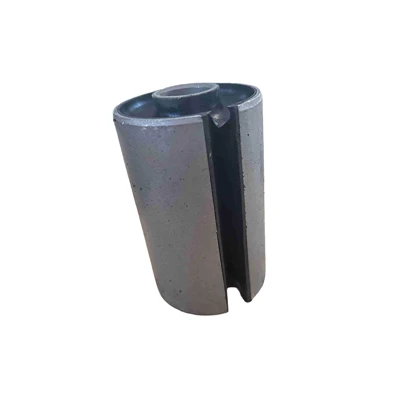
At the end of the day, the cost of rubber end gaskets isn’t a random number—it’s a calculation that factors in what you need, how much you need, and how long you need it to last. If you’re tired of guessing, or tired of dealing with gaskets that cost you more in repairs than they’re worth, hit me up. I don’t do generic pricing quotes—I take the time to ask about your application, what environment the gasket’s going in, how many pieces you need, and give you a transparent, no-surprise quote that fits your budget. No corporate runaround, just real talk and solid gaskets. Let’s chat about your next project, I’m here to help.
Rubber End Gasket References
Rubber Manufacturers Association. (2023). Rubber Material Properties and Industrial Application Standards.
ASTM International. (2022). Standard Specification for Rubber Gaskets for Piping and Valving.
Industrial Purchasing Magazine. (2024). Cost Drivers in Industrial Component Sourcing: Rubber Seals and Gaskets.
Anhui Anling Rubber & Plastic Co., Ltd.
We are one of the most professional rubber end gasket manufacturers and suppliers in China, featured by quality products and good service. Please rest assured to wholesale bulk rubber end gasket in stock here and get quotation from our factory. We also accept customized orders.
Address: 3.9-Square-Kilometer Industrial Park in the Development Zone, Anqing City, Anhui Province
E-mail: anhuianling@126.com
WebSite: https://www.anhuianling.com/
